Vietnam has become an increasingly attractive destination for Mexican travelers who want to explore Asia. Its cultural diversity, natural landscapes, rich cuisine, and affordable costs make the country an appealing option for long trips or multi-country journeys across Southeast Asia.
However, before planning the trip, it is essential to understand the entry requirements, as Mexican citizens are not exempt from a visa to enter Vietnam.
In this article, we clearly and up to date explain what Mexican travelers need to visit Vietnam in 2026, what type of visa they can apply for, and which practical aspects should be considered before departure.
Do Mexicans need a visa to travel to Vietnam?
Yes.
As of 2026, Vietnam does not offer visa-free entry for Mexican citizens.
Therefore, all Mexican travelers must obtain a visa in advance, even for short tourist stays.
Fortunately, the process is relatively simple thanks to Vietnam’s electronic visa (E-visa) system, which can be completed online in most cases without visiting an embassy.
Visa Options for Mexican Travelers
Vietnam E-visa
The E-visa is the most common option for Mexican travelers.
General features:
- Applied for online before the trip.
- Allows entry through approved international airports, land borders, and seaports.
- Suitable for tourism, family visits, and short-term stays.
- Length of stay and conditions depend on the regulations in force at the time of application.
It is recommended to apply well in advance, as processing may take several days.
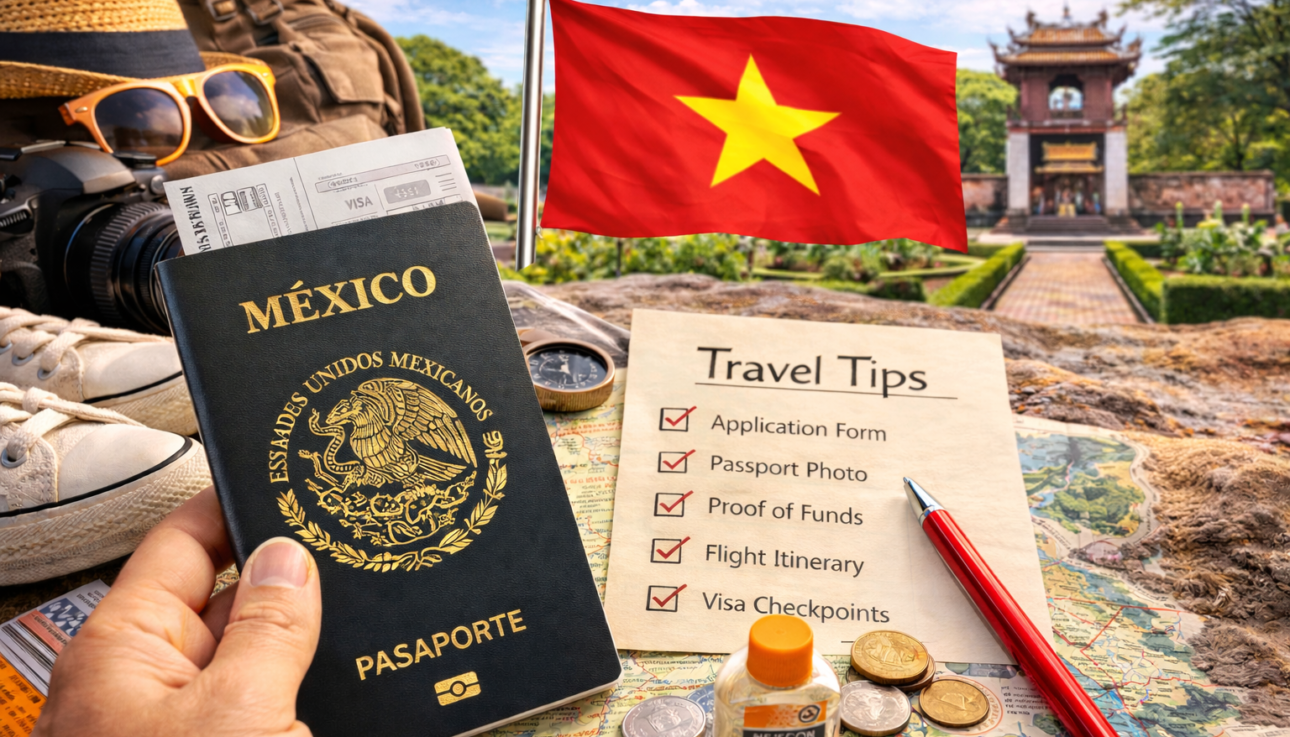
Visa application requirements
Mexican citizens must meet the following requirements to obtain a Vietnamese visa:
Passport
- A valid Mexican passport.
- Minimum validity of 6 months from the planned date of entry.
- At least two blank pages for immigration stamps.
Application form
- Correctly completed visa application form (online for E-visa).
- All information must exactly match the passport details.
Photo and passport copy
- Recent passport-style photo.
- Clear scan of the passport’s personal data page.
No entry ban
The applicant must not be on Vietnam’s list of individuals prohibited from entry for legal or immigration reasons.
Requirements upon arrival in Vietnam
In addition to an approved visa, immigration authorities may request the following documents:
Return or onward ticket
- Return ticket to Mexico or onward ticket to a third country.
- Must match the authorized visa period.
Confirmed accommodation
- Hotel booking, tourist accommodation, or a valid address in Vietnam.
- This information may be requested at immigration control.
Proof of financial means
Travelers must demonstrate sufficient funds to cover their stay.
This may include:
- Cash
- Bank cards
- Bank statements
There is no official minimum amount, but travelers should be able to cover basic expenses such as accommodation, transport, and food.
Compliance with immigration rules
- Respect the authorized length of stay.
- Do not engage in activities not permitted by the visa type (such as working without authorization).
Is Vietnam a safe country for Mexican travelers?
Yes.
Vietnam is considered one of the safest countries in Southeast Asia. Violent crime against tourists is rare, and most trips are completed without issues.
Still, basic precautions are recommended:
- Take care of personal belongings in crowded areas.
- Avoid carrying large amounts of cash.
- Use authorized transportation and reputable accommodations.
Travel insurance: highly recommended
Although not mandatory, international travel insurance is strongly recommended for Mexicans traveling to Vietnam in 2026.
A good policy should cover:
- Medical and hospital expenses.
- Accidents and emergencies.
- Repatriation.
- Flight cancellations or delays.
- Lost or delayed luggage.
International hospitals in major cities such as Hanoi and Ho Chi Minh City (Saigon) provide good medical care, but costs can be high for uninsured foreigners.
Practical Travel Tips for Vietnam
Currency and Payments
- Vietnam’s official currency is the Vietnamese dong (VND).
- Cash remains important, especially outside major cities.
- Credit cards are accepted in large hotels and restaurants.
Internet and mobile services
- Local SIM cards or eSIMs are easy to purchase.
- Available at airports and official stores.
- Mobile internet is affordable and generally reliable.
Climate
Vietnam has a wide climatic diversity due to its long geographical shape stretching from north to south. Before traveling, it is important to understand the climate of each region in order to choose the best time to visit and prepare appropriate luggage:
- Northern Vietnam: is divided into four clearly defined seasons:
- Spring (March to May): Mild temperatures, pleasant weather, and lush green landscapes. This is one of the best times to visit.
- Summer (June to early September): Hot and humid, with frequent rainfall, especially in July and August.
- Autumn (late September to November): Cool and comfortable weather, less rainfall, and clear skies; considered the best season to travel to northern Vietnam.
- Winter (December to February): Cool and dry. In mountainous areas such as Sapa, temperatures can drop significantly.
- Central Vietnam: has a more extreme climate with two main seasons:
- Rainy season (September to December): Higher risk of heavy rainfall and even typhoons, especially between October and early December.
- Dry season (January to August): Warm temperatures and generally good weather, ideal for beach destinations and cultural sightseeing.
- Southern Vietnam: has a tropical climate year-round, with stable temperatures, and is divided into two seasons:
- Dry season (November to April): Sunny days and low rainfall. This is the best time to visit southern Vietnam.
- Rainy season (May to October): Characterized by short but intense rain showers, usually in the afternoon, especially in September; therefore, it generally does not significantly affect travel plans.
Planning your trip according to the season helps avoid heavy rainfall or extreme heat and ensures a more comfortable travel experience.
Cultural Respect and Local Customs
For a positive experience, travelers are advised to:
- Dress appropriately when visiting temples and pagodas.
- Remove shoes when entering private homes or religious sites.
- Show respect for local customs and traditions.
- Avoid behavior that may be offensive to national or cultural symbols.
Summary: What Mexicans need to travel to Vietnam in 2026
In summary, Mexican citizens need a visa to travel to Vietnam in 2026.
To travel smoothly, they should:
- Apply for a visa (preferably an E-visa) before departure.
- Hold a passport valid for at least 6 months.
- Have proof of onward travel and confirmed accommodation.
- Demonstrate sufficient financial means.
- Respect immigration rules and the authorized length of stay.
With proper preparation, traveling from Mexico to Vietnam is entirely feasible and is usually a safe, enriching, and affordable experience, especially for those visiting Asia for the first time.