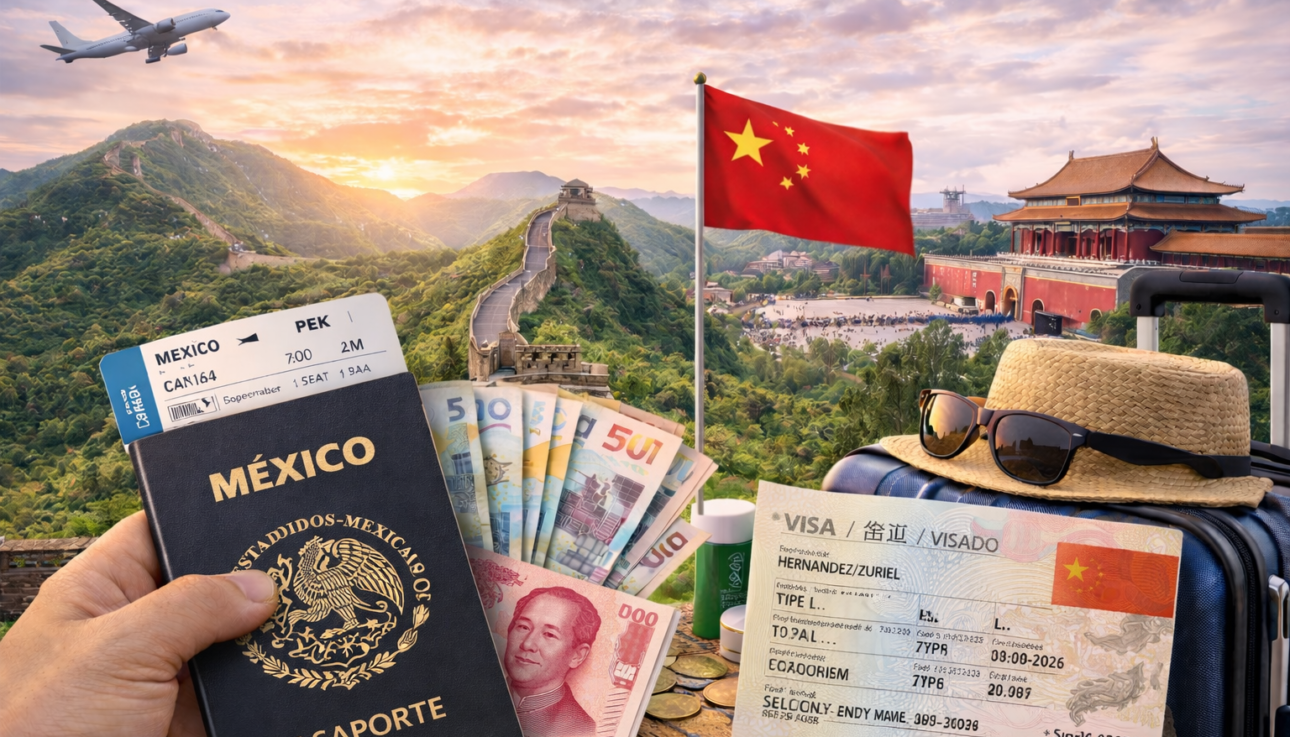
China has become one of the most attractive destinations for Mexican travelers thanks to its rich culture, unique cuisine, and impressive technological development. To fully enjoy the trip, it is essential to understand the immigration requirements and practical information before departure.
Do Mexican Citizens Need a Visa to Travel to China?
Yes, Mexican citizens generally need a visa to enter China.
The Type L tourist visa is the most common and usually allows stays of up to 30 days. Applications can be submitted through authorized visa centers or directly at the Chinese embassy or consulate.
To obtain a tourist visa, the following documents are usually required:
- A passport valid for at least six months from the date of entry
- At least two blank pages for entry stamps
- A completed official visa application form
- A return or onward travel ticket
- Hotel reservation or invitation letter
- Health declarations, if required
Authorities may request additional documentation depending on the applicant’s profile.
There are some exceptions, such as visits to Hong Kong or Macao, where Mexican citizens can stay for up to 90 days without a visa. Special programs also exist for certain cruise trips or transit stays, although these depend on specific conditions.
Although there are currently no mandatory vaccinations for travelers from Mexico, it is recommended to review medical advice and purchase international travel insurance that covers healthcare, hospitalization, and repatriation.
It is also important to respect local laws and customs regulations.
Is China a Safe Destination?
China is generally considered a safe destination for international tourists. Major cities have modern infrastructure and advanced security systems.
However, it is still recommended to:
- Avoid carrying large amounts of cash
- Use official transportation services
- Keep personal documents accessible
- Respect strict local laws
Public safety is usually high in tourist and commercial areas.
Transportation in China
China has an extremely efficient transportation network.
Railways are the country’s main transportation system, with high-speed trains connecting hundreds of cities such as Beijing, Shanghai, Guangzhou, and Xi’an with great efficiency and punctuality.
In addition, large cities offer:
- Modern metro networks
- Urban bus systems
- A wide range of domestic flights
- Transportation services through mobile applications
Public transportation is generally affordable and easy to use.
Currency and Payments
The official currency is the Chinese yuan (RMB).
Digital payments dominate everyday life in China. Many shops, restaurants, and services use mobile payment applications.
International cards can be used in tourist establishments, but it is also advisable to carry some cash.
Internet and SIM Cards
Internet access in China is regulated, and some international platforms may not be available.
Mexican travelers can choose from:
- Local SIM cards
- International eSIM services
- Roaming plans
It is recommended to download useful map and translation applications before traveling.
Climate in China
China has an enormous climatic diversity.
- North: very cold winters and short summers
- South: tropical or subtropical climate
- Central regions: hot and humid summers
- Mountain regions: alpine climate
Spring and autumn are usually the most pleasant seasons for traveling.
Cultural Respect and Local Etiquette
Mexican travelers should keep in mind certain cultural norms:
- Show respect in religious places
- Avoid behavior considered loud or disruptive
- Do not place chopsticks vertically in rice
- Respect local laws and regulations
Courtesy and respect are fundamental aspects of Chinese society.
Conclusion
Traveling to China from Mexico in 2026 is a unique opportunity to discover one of the most fascinating countries in the world. Properly preparing documentation, understanding the country’s digital systems, and respecting local customs will make the trip smoother and more enjoyable. Consulting official sources and planning in advance will help travelers enjoy an unforgettable cultural experience.