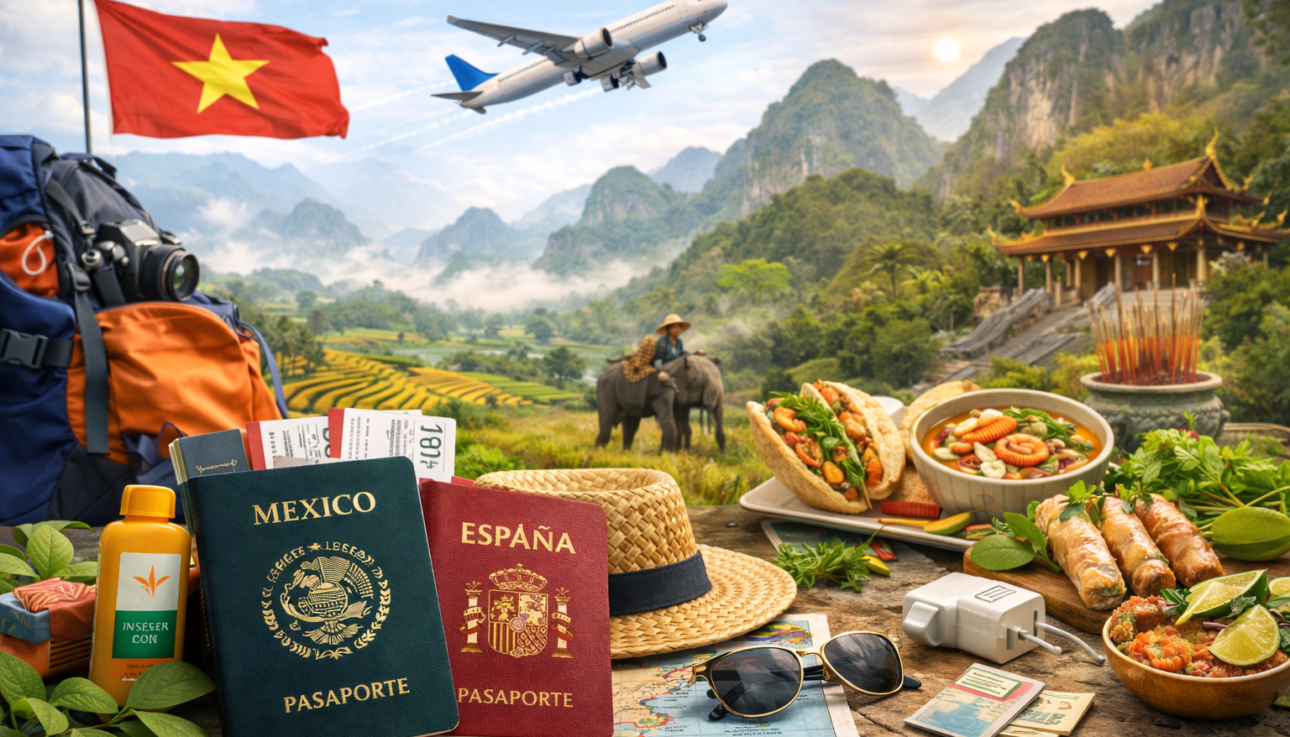
Vietnam is a Southeast Asian country known for its distinctive “S” shape and its long coastline stretching from north to south. In 2026, Vietnam continues to establish itself as one of the most attractive destinations in the region, welcoming millions of international travelers each year, including visitors from Spain and Latin American countries such as Mexico, Chile, and Brazil.
Thanks to its diverse geography, Vietnam offers a wide variety of landscapes within a single country — from vast plains and terraced rice fields to mountains, tropical beaches, and vibrant cities. In addition, the overall cost of travel and daily expenses is relatively affordable, making it possible to plan interesting itineraries without a large budget and suitable for different travel styles.
Traveling to Vietnam can be a very rewarding experience. However, as with any long-distance destination, it is important to be well informed before departure. These practical and easy-to-understand tips will help you plan your trip to Vietnam in 2026 safely, comfortably, and without unnecessary complications.
Climate and Best Time to Visit Vietnam
Vietnam has a tropical monsoon climate, with clear regional differences.
Northern Vietnam
In the north, the climate is divided into four distinct seasons:
- Spring (March to May): Mild and humid, with light rain.
- Summer (June to early September): Hot and rainy.
- Autumn (late September to November): Cool and pleasant, one of the best times to visit.
- Winter (December to February): Cold and dry, especially in mountainous areas.
Central Vietnam
Central Vietnam has two well-defined seasons:
- Rainy season (September to December): Higher risk of heavy rain and typhoons, particularly from October to early December.
- Dry season (January to August): Ideal for visiting coastal cities and beaches such as Hoi An, Da Nang, and Hue.
Southern Vietnam
The climate in the south is more stable throughout the year, with an average temperature of around 28°C and two main seasons:
- Rainy season (May to October): Short but intense showers, especially in September.
- Dry season (November to April): The best time to visit southern Vietnam.
What to Prepare Before Traveling to Vietnam?
Before traveling, it is essential to check entry requirements and necessary documentation based on your nationality. For detailed and up-to-date information, you can consult our specific articles:
- WHAT SPANISH TRAVELERS NEED TO KNOW BEFORE TRAVELING TO VIETNAM IN 2026
- WHAT DO MEXICAN CITIZENS NEED TO TRAVEL TO VIETNAM IN 2026?
In general, it is recommended to prepare the following:
- A passport with sufficient validity
- International travel insurance with medical coverage
- Clothing suitable for the season
- Comfortable walking shoes
- A raincoat or umbrella
- Sunscreen and insect repellent
- Power plug adapter and personal medication
Local Culture and Etiquette
Vietnam has a rich culture and deeply rooted traditions. To ensure a positive experience, it is important to respect local customs:
- Dress appropriately when visiting temples and pagodas (long pants and shirts with sleeves).
- Maintain a polite and respectful attitude.
- Avoid speaking negatively about public institutions or sensitive topics.
- Show courtesy in daily interactions with local people.
Transportation in Vietnam
Transportation in Vietnam is varied and relatively affordable.
- Motorbikes and cars are the most common means of transport in cities.
- Ride-hailing apps such as Grab and Xanh SM are convenient and safe options.
- Trains and domestic flights are good choices for long-distance travel.
- Buses are available but can be slower and less comfortable.
In large cities, traffic can be heavy, so planning your routes in advance is recommended.
Vietnamese Cuisine
Vietnamese cuisine is one of the country’s main attractions and is gaining international recognition. Trying street food is highly recommended and is an essential part of local culture.
Typical dishes you should try include:
- Bánh mì: Vietnamese sandwich
- Phở: Rice noodle soup with beef or chicken
- Bún chả: Rice noodles with grilled pork
- Nem rán: rollitos fritos
- Fresh spring rolls
Local coffee culture is also very popular, with specialties such as milk coffee, egg coffee, and coconut coffee, especially in major cities.
To avoid health issues, it is recommended to:
- Eat at clean and busy places.
- Drink only bottled water.
Safety in Vietnam
Vietnam is considered a very safe country for travelers. However, basic precautions are still advisable:
- Avoid walking alone in poorly lit or deserted areas, especially at night.
- Do not carry large amounts of cash or flashy jewelry.
- Take care of personal belongings in crowded places.
Currency and Payments
Vietnam’s official currency is the Vietnamese dong (VND).
- Cash is widely used, especially in local markets and small businesses.
- Credit cards are generally accepted only in shopping malls, hotels, and larger restaurants.
- ATMs are widely available, though withdrawal fees usually apply.
Internet and SIM Cards
Staying connected in Vietnam is easy:
- You can buy a local SIM card at the airport or official stores.
- Good 4G/5G coverage in cities and tourist areas.
- Wi-Fi is available in most hotels, restaurants, and cafés.
Conclusion
Traveling to Vietnam in 2026 is an excellent option for those seeking cultural diversity, varied landscapes, great food, and affordable prices. With proper preparation and a respectful attitude, the trip is generally safe, comfortable, and very enjoyable.
Vietnam is an ideal destination both for first-time visitors to Asia and for travelers who want to explore Southeast Asia more deeply.