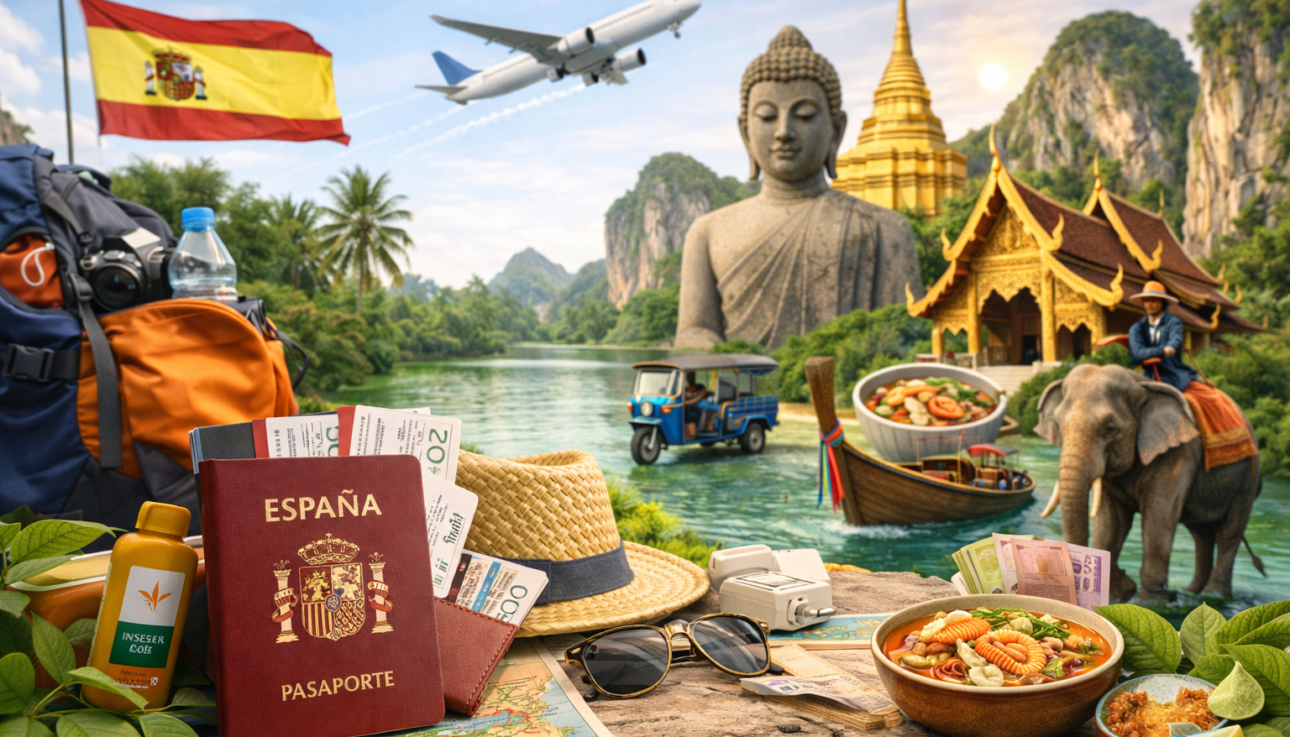
Known as the “Land of Smiles” and also as the land of golden temples, Thailand remains one of the most attractive destinations in Southeast Asia for Spanish travelers. In 2026, the country continues to welcome millions of visitors thanks to its mix of vibrant cities, diverse landscapes, ancient culture, famous cuisine, and affordable prices.
Traveling to Thailand can be a very rewarding experience, but like any long-distance destination, it is important to be well informed before leaving. In this article, you will find practical and easy-to-understand tips for Spaniards planning to travel to Thailand in 2026, helping you enjoy a smooth and stress-free trip.
Why choose Thailand as a destination?
Thailand offers a wide range of experiences in one country. From the constant energy of Bangkok to the green mountains of the north in Chiang Mai and Chiang Rai, as well as world-famous beaches such as Phuket, Krabi, Koh Samui, and Koh Phi Phi.
In addition, the country has thousands of Buddhist temples, traditional markets, national parks, and a daily lifestyle very different from Europe. This makes Thailand an ideal destination both for first-time travelers to Asia and for more experienced travelers.
Another strong point is the cost of travel. Thailand offers options for all budgets, from affordable accommodation, low-cost transportation, and reasonably priced local food to luxury resorts and fine dining restaurants.
Climate in Thailand: When is the best time to travel?
Thailand has a tropical monsoon climate, warm and humid throughout the year. It is divided into three main seasons:
Cool and dry season (November – February)
This is the best time to visit. The weather is pleasant and cooler, with little rainfall. November and December are usually high season, especially in Bangkok, Chiang Mai, and beach destinations.
Hot season (March – May)
Temperatures can exceed 40°C, especially in April. This is a good time to enjoy beaches and islands. April is also when Songkran, the famous water festival marking the Thai New Year, takes place.
Rainy season (June – October)
This is the low season. Rainfall is more frequent, especially between August and September, due to the southwest monsoon. However, rain showers are usually heavy but short. Traveling during this period allows you to find better prices and fewer tourists.
What should you prepare before traveling to Thailand?
Before organizing your trip, it is essential to check entry requirements, visa regulations, and travel documents. For detailed and up-to-date information, you can consult our specific article: WHAT DO SPANIARDS NEED TO TRAVEL TO THAILAND IN 2026?
In addition, it is recommended to have:
- A passport with sufficient validity
- International travel insurance with medical coverage
- Return or onward ticket
- Accommodation reservations (at least for the first few days)
Internet and SIM Cards
Staying connected in Thailand is easy:
• Buy a local SIM card at the airport or official stores
• Good 4G/5G coverage in cities and tourist areas
• Wi-Fi available in hotels, cafés, and restaurants
Transportation in Thailand
Getting around Thailand is relatively easy and affordable.
In large cities like Bangkok, the most practical options are:
- BTS Skytrain and MRT (subway) to avoid traffic
- Grab or Bolt, ride-hailing apps similar to Uber
- Taxis and tuk-tuks (always agree on the price beforehand)
For long-distance travel between cities, domestic flights, overnight trains, and long-distance buses offer good value for money.
Places you should not miss in Thailand
Bangkok
The capital is intense, chaotic, and fascinating. Highlights include:
- The Grand Palace and Wat Phra Kaew (Temple of the Emerald Buddha)
- Wat Arun, especially at sunset
- Chinatown
- Damnoen Saduak Floating Market
- Maeklong Railway Market
Chiang Mai and Chiang Rai
In the north of the country, you will find a calmer atmosphere and nature:
- Chiang Mai: Wat Phra That Doi Suthep, Wat Chedi Luang, and Doi Inthanon National Park
- Chiang Rai: Golden Triangle, Doi Tung, and the famous White Temple (Wat Rong Khun)
Beaches and islands
For those looking to relax or enjoy the sea:
- Phuket
- Krabi
- Phang Nga Bay
- Koh Samui
- Koh Phi Phi
Traditional festivals in Thailand
Taking part in a local festival can greatly enrich your trip:
- January / February: Chinese New Year (according to the lunar calendar)
- February: Chiang Mai Flower Festival
- April (13–15): Songkran, the water festival celebrated nationwide
- November: Loy Krathong across the country and Yi Peng, especially in Chiang Mai, with floating and flying lanterns
Recommended experiences in Thailand
- Dinner cruise on the Chao Phraya River
- Thai cooking classes to learn how to prepare traditional dishes such as Pad Thai and Tom Yum
- Traditional Thai massage
- Watching a Muay Thai boxing match
Typical dishes you should try
Thai cuisine is one of the country’s main attractions:
- Pad Thai: stir-fried noodles with shrimp
- Tom Yum: spicy and sour soup
- Mango Sticky Rice: glutinous rice with mango and coconut milk
Safety in Thailand
Thailand is a very safe country for travelers. Still, it is advisable to:
- Keep an eye on your belongings in tourist areas
- Avoid common scams (taxis without meters, deals that seem too cheap)
- Respect local laws and customs
What should you pack in your suitcase?
It is recommended to bring some basic items:
- Light and comfortable clothing
- Suitable walking shoes
- Sunscreen and insect repellent
- Power plug adapter
- Important documents and backup copies
- Personal medication
Conclusion
Traveling to Thailand in 2026 is an excellent option for Spanish travelers looking for culture, nature, good food, and reasonable prices. With basic preparation, clear information, and an open attitude, the trip is usually smooth and very enjoyable.
Thailand is a safe, welcoming, and diverse country, ideal for both short trips and longer stays or combined journeys with other Southeast Asian destinations.