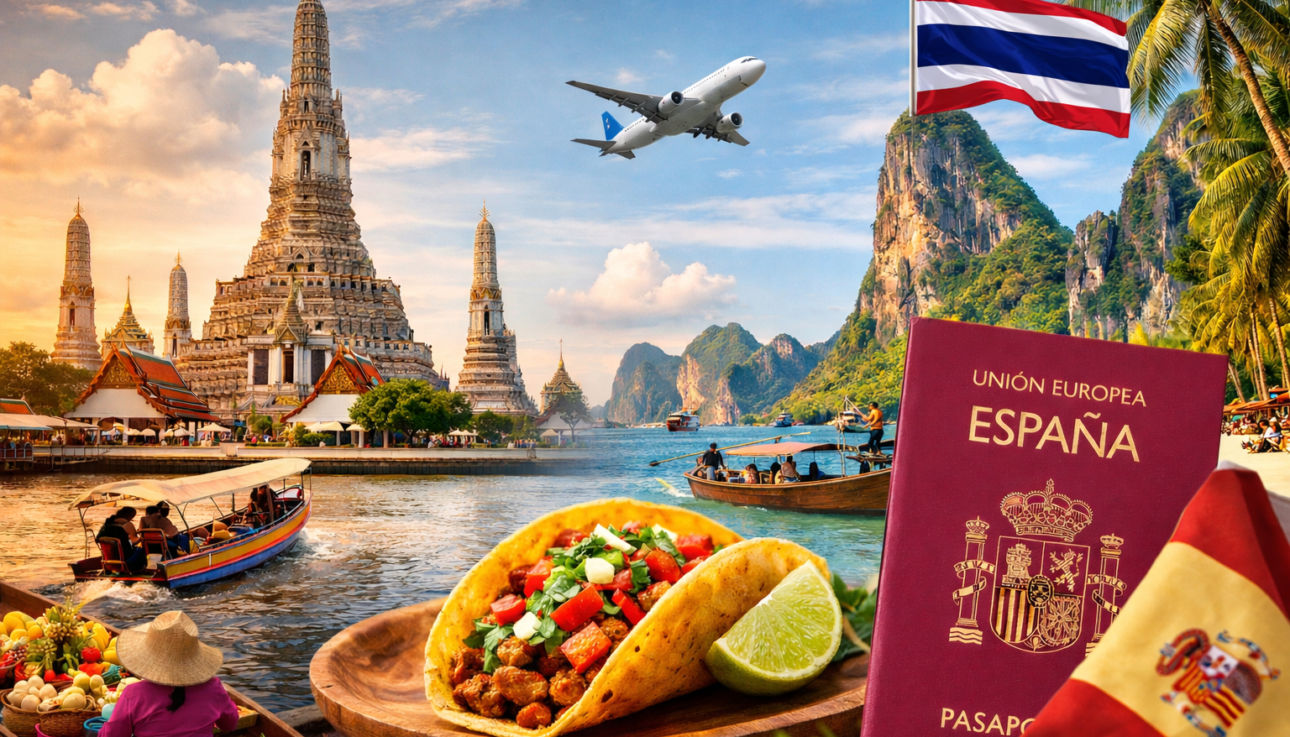
Thailand continues to be one of the most popular destinations in Asia for Spanish travelers in 2026. Its combination of tropical beaches, vibrant cities, historic temples, and world-famous cuisine attracts both first-time visitors and those returning to the country.
Although Spanish citizens can travel to Thailand without applying for a tourist visa in advance, this does not mean that entry is automatic or that there are no requirements. To avoid issues upon arrival and to start the trip with peace of mind, it is important to know which documents are mandatory, what immigration authorities may request, and which changes apply in 2026.
This article provides a clear and up-to-date guide for those planning to travel from Spain to Thailand for tourism purposes.
Do Spaniards Need a Visa to Travel to Thailand?
In general, Spanish citizens are exempt from a visa for short-term tourist trips. This allows them to enter Thailand without applying for a visa in advance and stay in the country for a period that usually ranges between 30 and 60 days, depending on current regulations and the decision of the immigration officer upon arrival.
It is important to note that visa exemption does not remove other entry requirements, nor does it automatically guarantee entry into the country. Travelers must comply with all conditions set by Thai authorities.
1. Mandatory Documents to Enter Thailand
Before traveling, it is essential to prepare the required documentation properly. Although not all documents are always requested, immigration authorities may ask for any of the following.
Valid Passport
The Spanish passport must:
- Be valid for at least six months from the date of entry
- Have at least two blank pages for immigration stamps
A passport with insufficient validity may result in entry being denied.
Onward or Return Flight Ticket
Travelers must present:
- A return ticket to Spain, or
- An onward ticket to another country
This document proves that the traveler does not intend to stay in Thailand beyond the permitted period.
Proof of Accommodation
Authorities may request:
- Hotel reservation
- A detailed travel itinerary
- Invitation letter (if staying with friends or family)
The purpose is to verify where the visitor will stay during the trip.
Digital Entry Form (TM6 / e-TM6)
In 2026, the TM6 entry form must be completed digitally (e-TM6) before arrival.
This registration includes personal information, flight details, and accommodation data, and replaces the old paper form. Completing it in advance helps speed up the immigration process.
Proof of Financial Means
It is recommended to have at least 10,000 Thai baht per person, which can be demonstrated through:
- Cash
- International credit cards
- Recent bank statements
This requirement helps ensure that visitors can cover basic expenses during their stay.
2. Other Important Aspects to Prepare Before the Trip
Beyond mandatory documents, there are other practical elements that make traveling in Thailand easier.
Currency and Payments
The official currency is the Thai baht (THB).
It is recommended to:
- Exchange a small amount before traveling or upon arrival
- Use cards in hotels and larger restaurants
- Carry some cash for markets and rural areas
SIM or eSIM
Buying a tourist SIM or eSIM is easy and affordable.
They are available:
- At the airport
- In convenience stores
- From local mobile operators
This makes navigation, map use, and communication easier.
Travel Insurance
Although not always mandatory, having travel insurance is strongly recommended.
It should cover:
- Medical care
- Hospitalización
- Cancellations or unexpected events
Healthcare services in Thailand are generally good, but can be expensive without insurance.
Planning and Clothing
Thailand has a warm climate throughout the year. Travelers should bring:
- Lightweight and breathable clothing
- Comfortable footwear
- Respectful clothing for temple visits (covered shoulders and knees)
3. Cultural Rules and Behavior
Respecting local customs is essential for a positive experience.
Basic guidelines include:
- Removing shoes before entering homes and temples
- Dressing appropriately in religious places
- Avoiding touching other people’s heads
- Using the traditional wai greeting in formal situations
- Maintaining a calm and respectful attitude in public
Thai culture places great value on politeness and respect.
4. Important Considerations for 2026
Visa Exemption with Conditions
Spain is part of the group of countries eligible for visa-free tourist entry, but:
- The length of stay may vary (30 – 60 days)
- Working or paid activities are not allowed
- Improper use of the visa exemption may cause issues for future entries
Immigration Control
Authorities have strengthened checks on:
- Purpose of travel
- Documentation
- Financial means
Traveling well prepared reduces the risk of delays or refusal of entry.
Final Entry Decision
The final decision always rests with the immigration officer at the port of entry, even if all requirements are met.
5. Cases Where a Visa Is Required
A Spanish citizen must apply for a visa before traveling if:
- Planning to stay longer than the permitted period
- You are traveling for work, studies, or volunteering
- You intend to carry out non-tourist activities
- Having a complex immigration history
In these situations, it is advisable to consult the Thai Embassy or Consulate in Spain.
Conclusion
Traveling to Thailand from Spain in 2026 is relatively straightforward, but it requires preparation and attention to detail.
Visa exemption simplifies the process, but it does not eliminate the obligation to present valid documents, demonstrate financial means, and comply with immigration and cultural regulations.
Having a valid passport, an onward or return ticket, confirmed accommodation, the digital TM6 form completed, and a respectful attitude will allow Spanish travelers to enjoy Thailand without complications and start their journey in an organized and stress-free way.