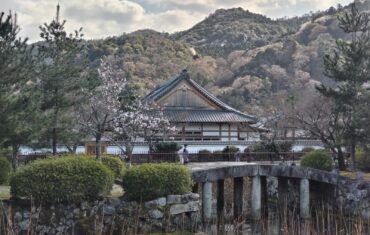
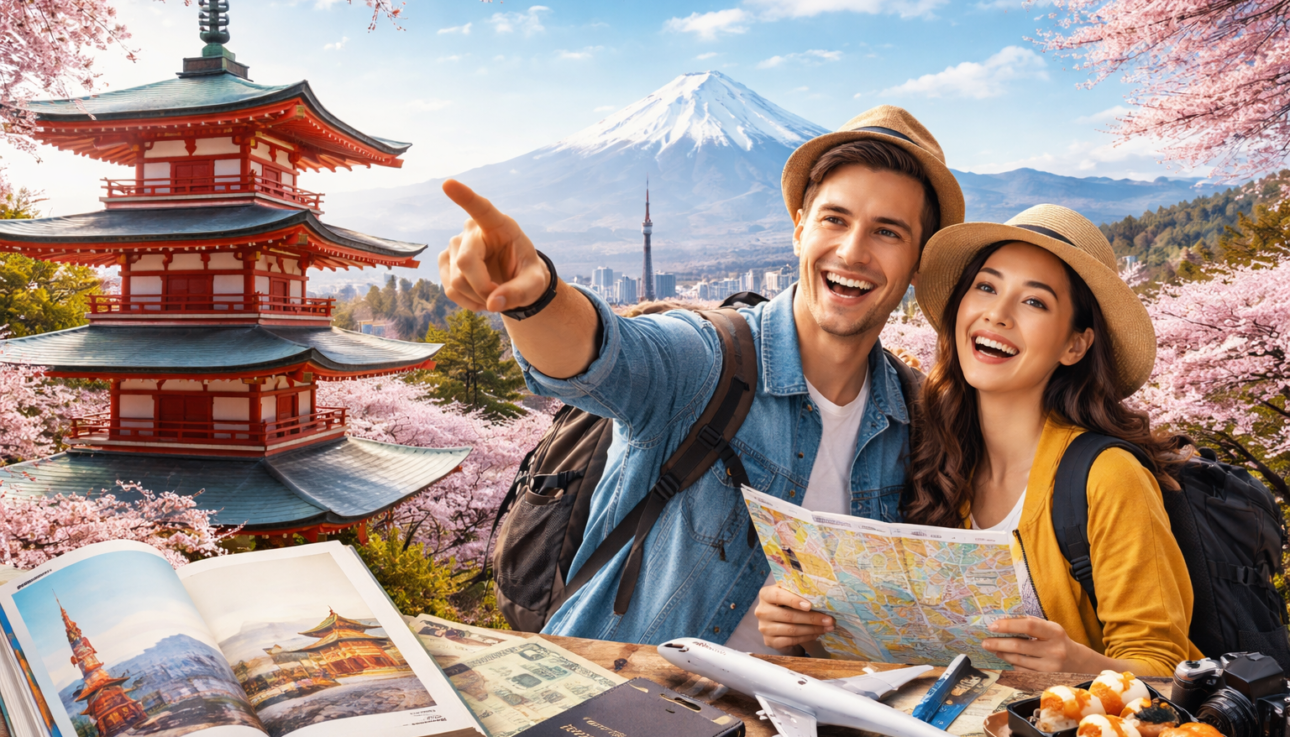
Japan is a destination that fascinates travelers with its unique balance between tradition and modernity. From ancient temples and natural landscapes to futuristic cities and one of the most renowned cuisines in the world, the country offers unforgettable experiences for all types of travelers. If you are planning a trip to Japan in 2026, whether from Spain or Mexico, this guide will help you prepare with practical, clear, and up-to-date information.
Climate and Best Time to Travel to Japan
Japan has four clearly defined seasons, and the climate varies from north to south across the country.
- Spring (March to May): Mild temperatures and the famous cherry blossom season (sakura). It is one of the most popular times to visit Japan.
- Summer (June to August): Hot and humid. Early summer coincides with the rainy season (Baiu), especially in June and July.
- Autumn (September to November): Cool weather, clear skies, and beautiful autumn landscapes. Considered one of the best seasons to travel.
- Winter (December to February): Cold, with heavy snowfall on the Sea of Japan side and in mountainous regions, while the Pacific coast is usually sunnier.
Best time to travel: Spring and Autumn, thanks to their pleasant and stable weather.
What to Prepare Before Traveling to Japan?
Before traveling, it is essential to review the entry requirements, visa regulations, and necessary documentation according to your nationality. For detailed and updated information, you can consult our specific articles:
- TRAVELING TO JAPAN FROM SPAIN IN 2026: REQUIREMENTS, VISA, AND DOCUMENTS
- EVERYTHING YOU NEED TO TRAVEL TO JAPAN FROM MEXICO IN 2026
Essential preparations
- Valid passport with at least six months of remaining validity.
- Return ticket or proof of onward travel.
- Accommodation reservation or travel itinerary.
- International travel insurance, highly recommended to cover medical expenses.
- Digital copies of important documents.
Japan does not require a visa for short stays for tourism or non-paid business for Spanish and Mexican citizens, but entry is always subject to the discretion of the immigration officer.
Local Culture and Behavioral Etiquette
Japanese society places great value on respect, courtesy, and order. Understanding some basic cultural norms can help travelers integrate better and avoid uncomfortable situations.
Important cultural tips:
- Always be punctual.
- Avoid speaking loudly on public transportation.
- Remove your shoes when entering homes, temples, or traditional accommodations.
- Avoid eating or drinking while walking on the street.
- Respect recycling and waste separation rules.
Respectful behavior is highly appreciated and helps create positive interactions with local people.
Transportation in Japan
Japan’s transportation system is one of the most efficient and advanced in the world.
- Railways: the main form of transportation.
- Shinkansen (bullet train): famous for its safety and punctuality, connecting major cities.
- Metro: widely developed in cities such as Tokyo, Osaka, Kyoto, and Hiroshima.
- Buses and domestic flights: complement the railway network.
IC cards allow easy payment on trains, metros, and buses, making daily travel more convenient for tourists.
Japanese Cuisine
Japanese cuisine, known as washoku, was recognized in 2013 as an Intangible Cultural Heritage of Humanity by UNESCO. It reflects centuries of culinary tradition, respect for ingredients, and balance of flavors.
Japan is also a global gastronomic powerhouse. According to the Michelin Guide 2025, it is the second country with the most three-star restaurants in the world, behind only France. Tokyo has held the title of the city with the most Michelin-starred restaurants worldwide for more than 15 years.
Dishes you should not miss:
- Ramen: noodle soup with many regional variations.
- Sushi and sashimi: fresh fish and seafood, icons of Japanese cuisine.
- Tempura: battered and fried vegetables and seafood.
- Okonomiyaki: a savory pancake made with cabbage and other ingredients.
- Yakitori: grilled chicken skewers.
- Udon and soba: wheat and buckwheat noodles.
- Tonkatsu: breaded and fried pork cutlet.
- Takoyaki: octopus-filled balls typical of Osaka.
- Japanese curry: thick and mild, served with rice.
- Mochi and daifuku: traditional sweets made from glutinous rice.
- Wagyu or Kobe beef: famous for its exceptional texture and flavor.
Safety in Japan
Japan is considered one of the safest countries in the world.
Violent crime is extremely rare, and the level of public order is very high.
However, it is still recommended to:
- Take basic precautions with personal belongings.
- Follow instructions in case of natural disasters such as earthquakes.
- Respect local rules at all times.
Currency and Payments
The official currency is the Japanese yen (JPY).
- Cash is still widely used, even in major cities.
- Credit cards are accepted in hotels, shopping centers, and large restaurants.
- Electronic payments are growing but are not universal.
It is recommended to always carry some cash, especially in rural areas.
Internet and SIM Cards
- SIM and eSIM cards are available at airports and specialized stores.
- Excellent nationwide 4G/5G coverage.
- Free Wi-Fi is available in stations, hotels, cafés, and public spaces.
Conclusion
Traveling to Japan in 2026 is a wonderful experience that combines culture, technology, nature, and world-class gastronomy. With proper preparation, respect for local customs, and an understanding of the climate and transportation system, both Spanish and Mexican travelers can enjoy a safe, comfortable, and memorable journey in one of the most fascinating destinations on the planet.