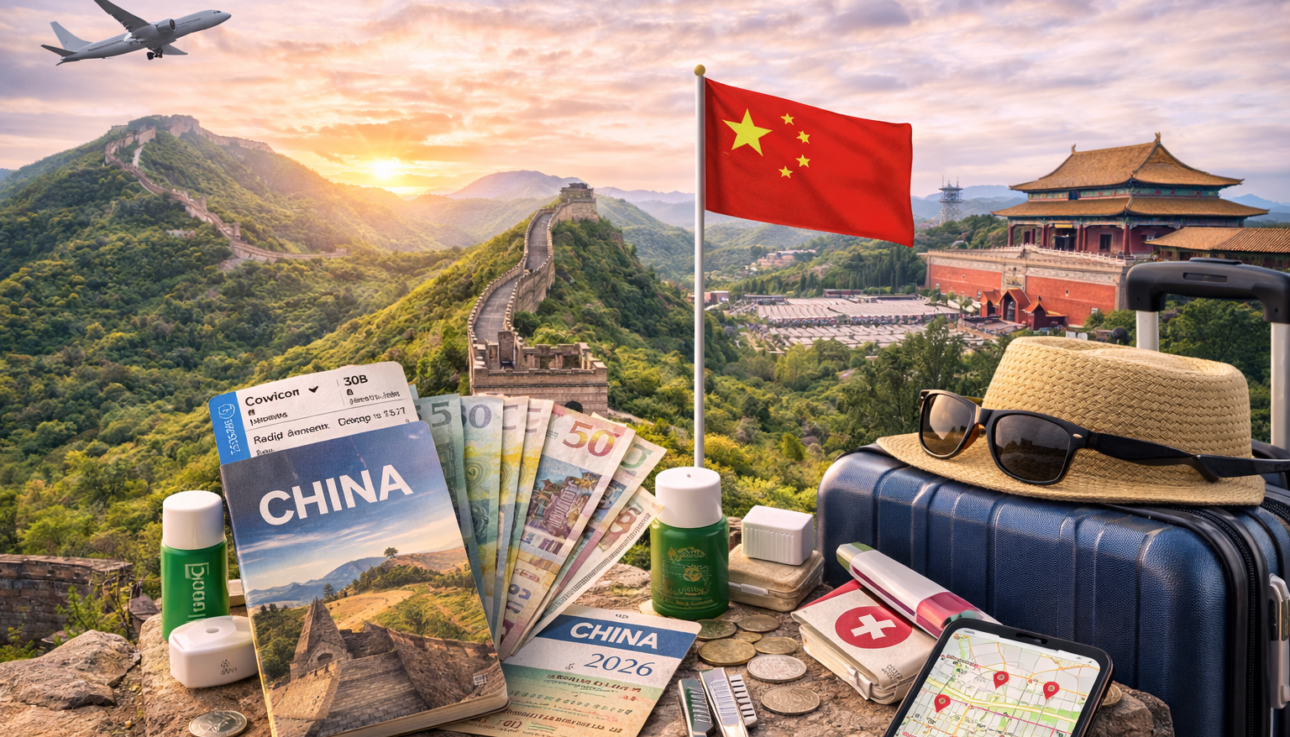
China is one of the most fascinating destinations in the world. Its combination of thousands of years of history, futuristic cities, unique cuisine, and spectacular landscapes attracts millions of international travelers every year. However, due to its vast size, cultural diversity, and specific regulations, it is important to plan your trip carefully to avoid inconveniences.
Below you will find practical and updated tips for travelers from Spain and Mexico who plan to visit China in 2026.
Climate and Best Time to Travel to China
China has one of the most diverse climates on the planet due to its enormous territorial extension. The country stretches from tropical regions to areas with subarctic climates, which means the weather can vary significantly depending on the destination.
In the north of the country, especially in provinces such as Heilongjiang or Inner Mongolia, winters are usually very long and extremely cold, while summers are short but pleasant. In contrast, the south, including places such as Hainan Island or some areas of Yunnan, has a tropical or subtropical climate with warm temperatures almost all year round.
The central regions, where cities such as Chongqing, Wuhan, and Nanjing are located, are known for their very hot and humid summers.
In general, the best times to travel to China are:
- Spring (April to May): mild temperatures and blooming landscapes.
- Autumn (September to October): clear skies, pleasant weather, and lower humidity.
Summer can be suitable if you visit mountainous areas or northern regions, while winter is ideal for travelers who want to experience traditional festivals or enjoy snowy landscapes.
What to Prepare Before Traveling to China?
Before organizing your trip, we recommend checking the entry requirements and necessary documents according to your country of origin. To learn all the details, you can consult our specialized articles:
- EVERYTHING YOU NEED TO TRAVEL TO CHINA FROM SPAIN IN 2026
- TRAVELING TO CHINA FROM MEXICO IN 2026: REQUIREMENTS AND VISA
Other Important Preparations
- International travel insurance with medical coverage is highly recommended.
- Health declaration if required by authorities.
- Mandatory police registration within the first 24 hours after arrival (usually handled by the hotel).
Local Culture and Etiquette
China has deeply rooted social traditions, and cultural respect is highly valued.
Some basic rules include:
- Greet politely and avoid excessive physical contact with strangers.
- Do not place chopsticks vertically in rice, as this has funeral connotations.
- Maintain respectful behavior in temples and historical sites.
- Avoid public arguments or behavior considered aggressive.
- Ask for permission before taking photos of people, especially in rural areas.
Respecting social norms makes interaction with local people easier and improves the overall travel experience.
Transportation in China
China has one of the most developed transportation systems in the world, and traveling within the country is usually easy.
Railways are the main transportation option for long distances. The high-speed train network connects major cities such as Beijing, Shanghai, Xi’an, and Guangzhou, offering fast, comfortable, and punctual travel.
In large cities there are also:
- Extensive, modern, and affordable metro networks.
- Urban bus systems and rapid bus lines.
- Regulated taxi services.
- Widely used mobile transportation applications.
Additionally, China has numerous domestic flights that allow travelers to cover long distances in a short time.
Chinese Cuisine
Chinese cuisine is one of the oldest and most complex in the world. It is characterized by the pursuit of balance between flavors, textures, and colors, using techniques such as stir-frying, steaming, and braising.
There are eight major regional culinary traditions, including:
- Sichuan: famous for its spicy and aromatic flavors, with dishes such as Mapo Tofu or Kung Pao Chicken.
- Cantonese: known for mild and fresh flavors, often using steaming and stir-frying techniques.
- Shandong: specialized in seafood and light soups.
- Jiangsu and Huaiyang: known for delicate dishes that highlight the natural flavors of ingredients.
- Fujian: famous for soups and the use of fermented ingredients.
- Hunan: characterized by intensely spicy and aromatic flavors.
- Anhui: uses wild herbs and braising techniques.
- Zhejiang: recognized for fresh seafood and refined dishes.
Trying local food is an essential part of the travel experience, although it is advisable to check ingredients if you have dietary restrictions or allergies.
Safety in China
China is generally a safe country for international tourists. Crime rates are usually low, especially in urban and tourist areas.
However, it is still recommended to:
- Take care of personal belongings in crowded places.
- Use official transportation or authorized applications.
- Carry a copy of your passport.
- Respect local laws, which can be strict.
Chinese cities also have extensive surveillance systems that contribute to public safety.
Currency and Payments
The official currency is the Chinese yuan (RMB).
China is one of the most advanced countries in digital payments. Most shops, restaurants, and services use mobile applications for transactions.
Although it is becoming easier to link international cards to these apps, it is recommended to carry some cash, especially when visiting markets or rural areas.
International cards are usually accepted in hotels, airports, and large shopping centers.
Internet and SIM Cards
Internet access in China is regulated, and some international platforms may not be available.
To stay connected, travelers can:
- Buy local SIM cards.
- Use international eSIM services.
- Activate roaming services.
It is advisable to download map, translation, and transportation apps in advance to make traveling within the country easier.
Conclusion
Traveling to China in 2026 offers an extraordinary opportunity to discover an ancient civilization that coexists with some of the most modern cities in the world. Both Spanish and Mexican travelers should prepare their documentation in advance, especially regarding immigration requirements, which may vary depending on nationality.
In addition, understanding cultural norms, becoming familiar with digital payment systems, and planning transportation within the country will allow travelers to enjoy their trip more comfortably and safely.
It is always essential to consult official sources before traveling, as immigration policies may change. With proper preparation, China offers a unique cultural, gastronomic, and scenic experience that will undoubtedly leave unforgettable memories.