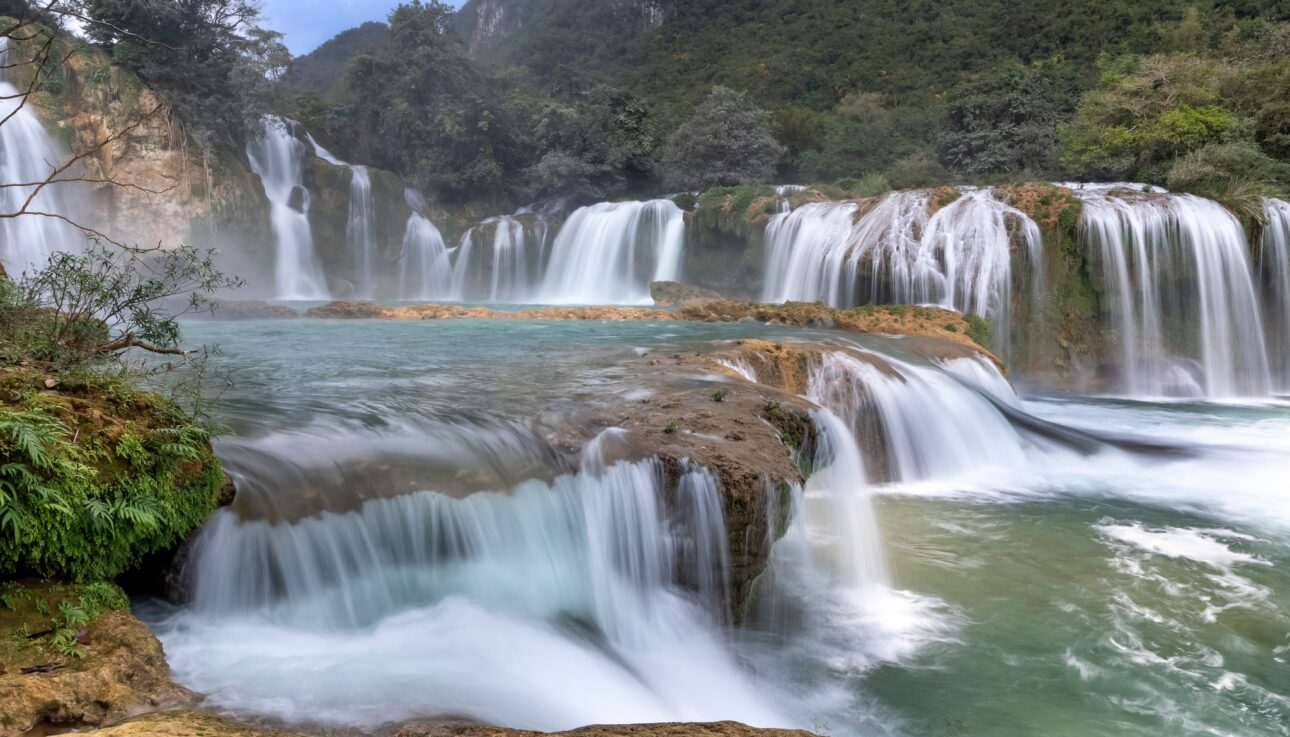
Ban Gioc Waterfall is located in Cao Bang Province, in the far north of Vietnam, along the natural border between Vietnam and China. It is considered one of the largest and most impressive waterfalls in Southeast Asia and one of Vietnam’s most important natural landmarks. Surrounded by mountains, rivers, and rural villages, Ban Gioc offers visitors a calm and authentic experience, far from crowded tourist centers.
Autumn is often considered the best time to visit Ban Gioc. From September to November, the weather is mild and comfortable, with clear skies and soft sunlight. During this season, the surrounding mountains turn green and golden, rice fields near the border villages reach harvest time, and the waterfall flows strongly but peacefully. The combination of light, water, and landscape creates a balanced and natural atmosphere that many travelers find memorable.
A Natural Border Shaped by Water and Stone
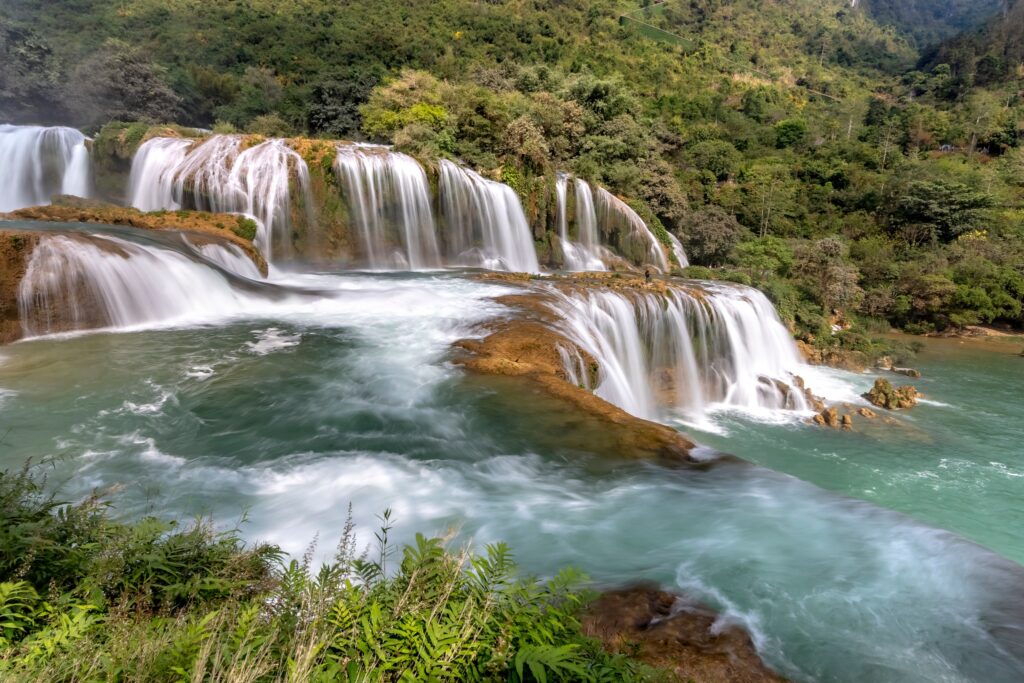
Ban Gioc Waterfall lies on the Quay Son River, which flows between Vietnam and China. The waterfall is divided into several levels and sections, with water cascading over wide limestone cliffs. Unlike narrow waterfalls that fall in a single stream, Ban Gioc spreads across a broad area, creating a powerful yet gentle scene. From a distance, the falling water looks like white silk ribbons moving continuously against a green mountain background.
What makes Ban Gioc special is not only its size, but also its setting. The waterfall is surrounded by open valleys, limestone peaks, and farmland. There are no tall buildings or urban noise nearby, allowing visitors to fully experience the sounds of nature. The sound of water, the movement of clouds, and the open space all contribute to a feeling of calm and openness.
In autumn, the water level is usually ideal. It is strong enough to show the waterfall’s full beauty, but not too intense. The sunlight during this season often creates soft reflections on the water, especially in the early morning or late afternoon.
Experiencing the Waterfall Up Close
One of the most popular ways to experience Ban Gioc is by taking a bamboo raft on the Quay Son River. These simple rafts are operated by local residents and allow visitors to approach the waterfall from below. From the water, the scale of the waterfall becomes even more impressive. Mist from the falling water cools the air, and the steady sound of the cascade fills the space.
The bamboo raft ride is slow and peaceful. It does not require special skills and is suitable for most visitors. This experience allows travelers to feel close to nature without rushing. Many visitors choose to sit quietly, take photos, or simply observe the landscape from the river.
Walking paths around the waterfall also provide different viewpoints. From higher ground, visitors can see the full width of Ban Gioc and the surrounding countryside. These paths are easy to follow and do not require advanced hiking experience.
Nguom Ngao Cave – A Hidden Underground World
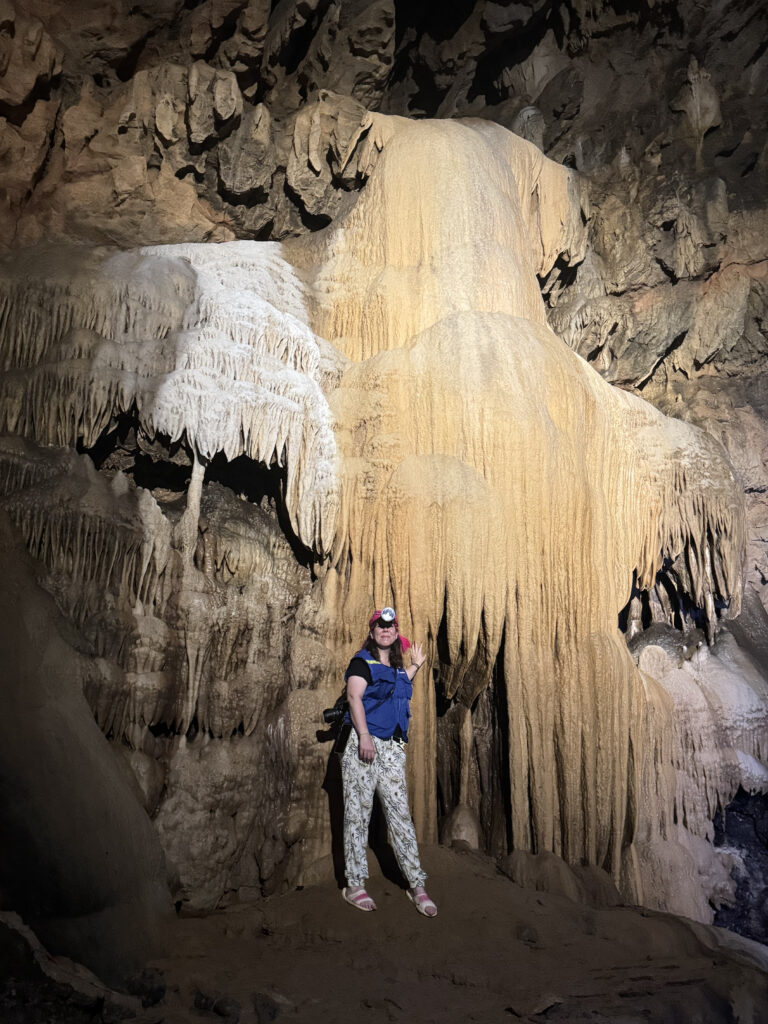
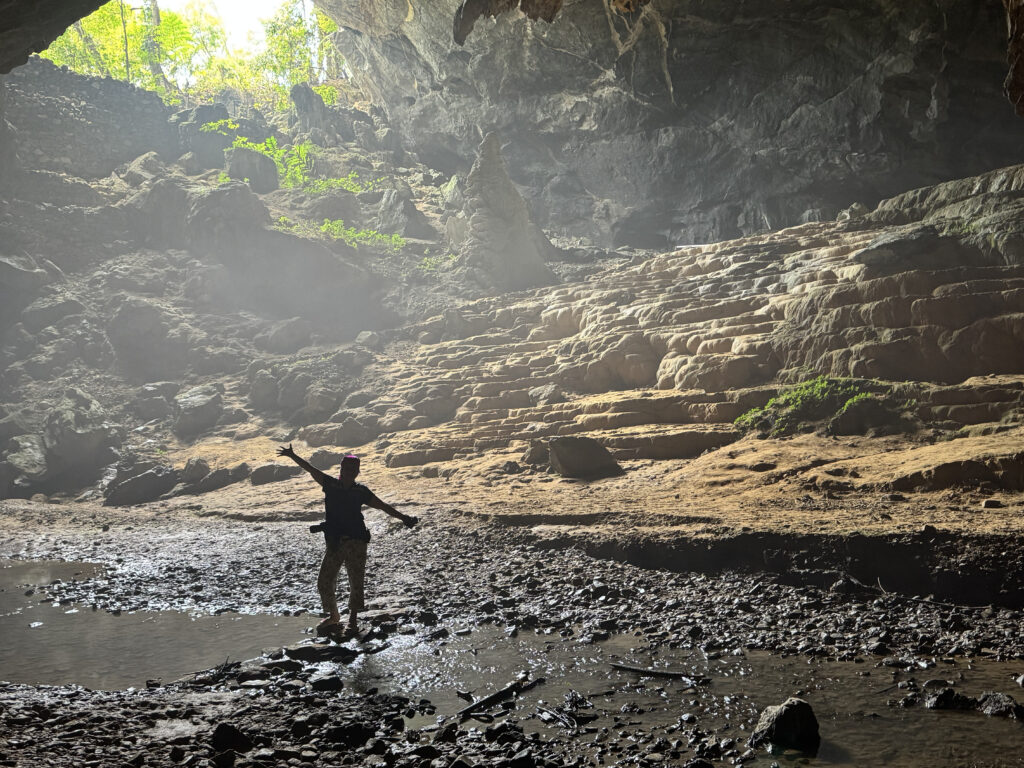
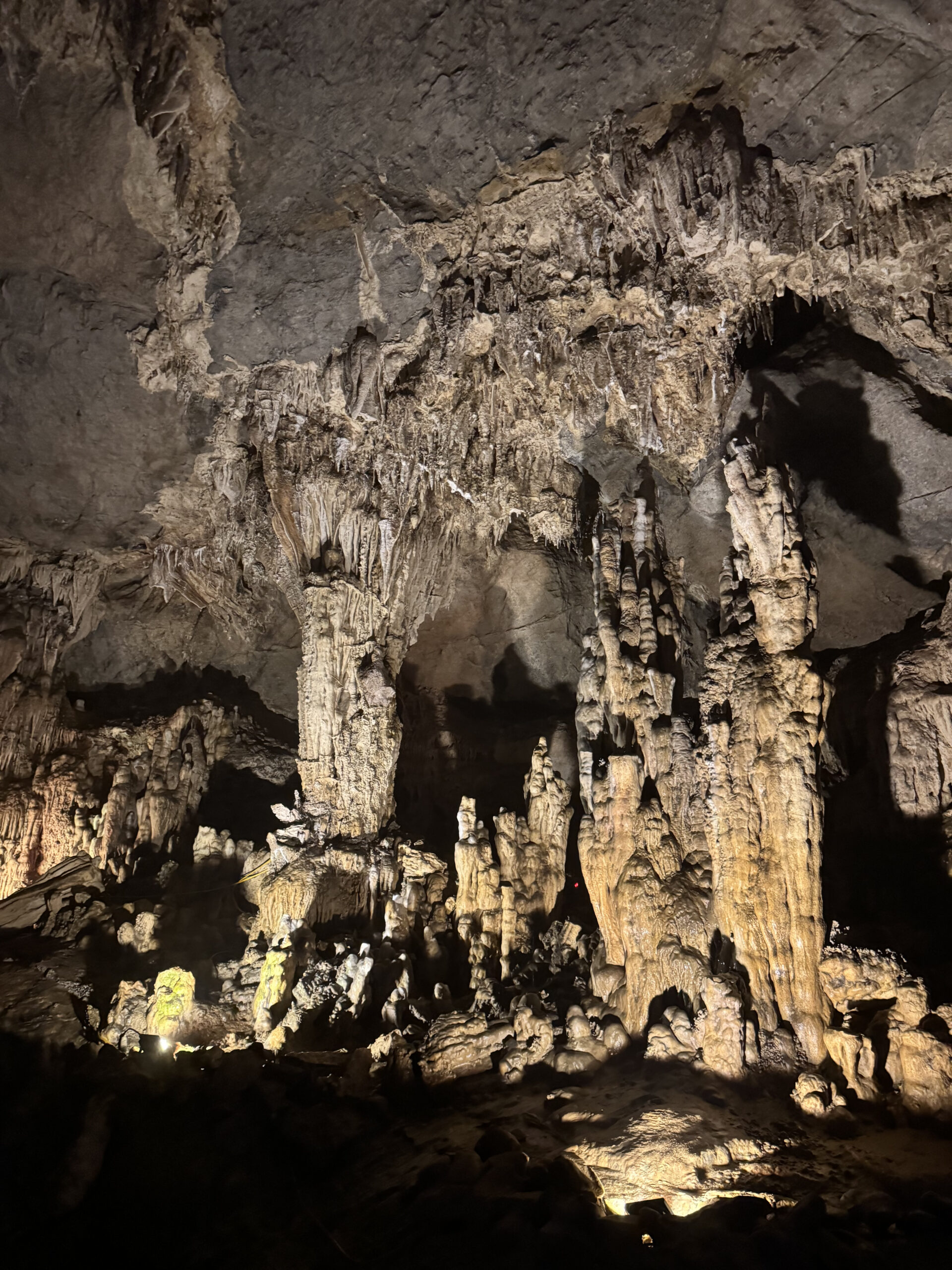
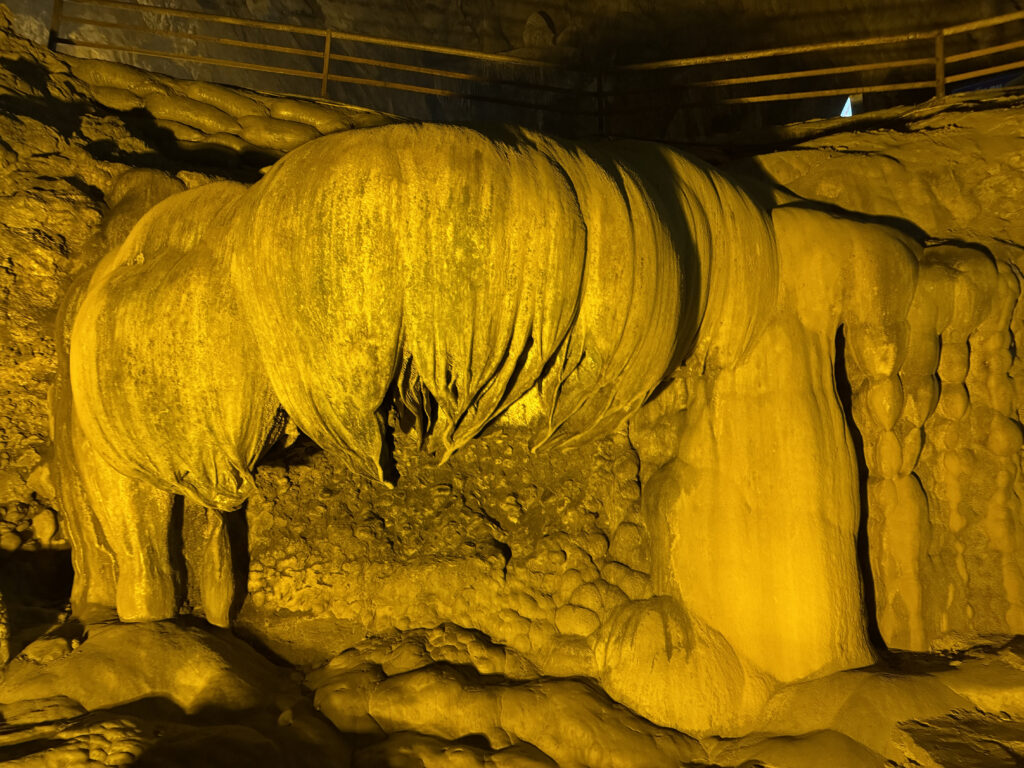
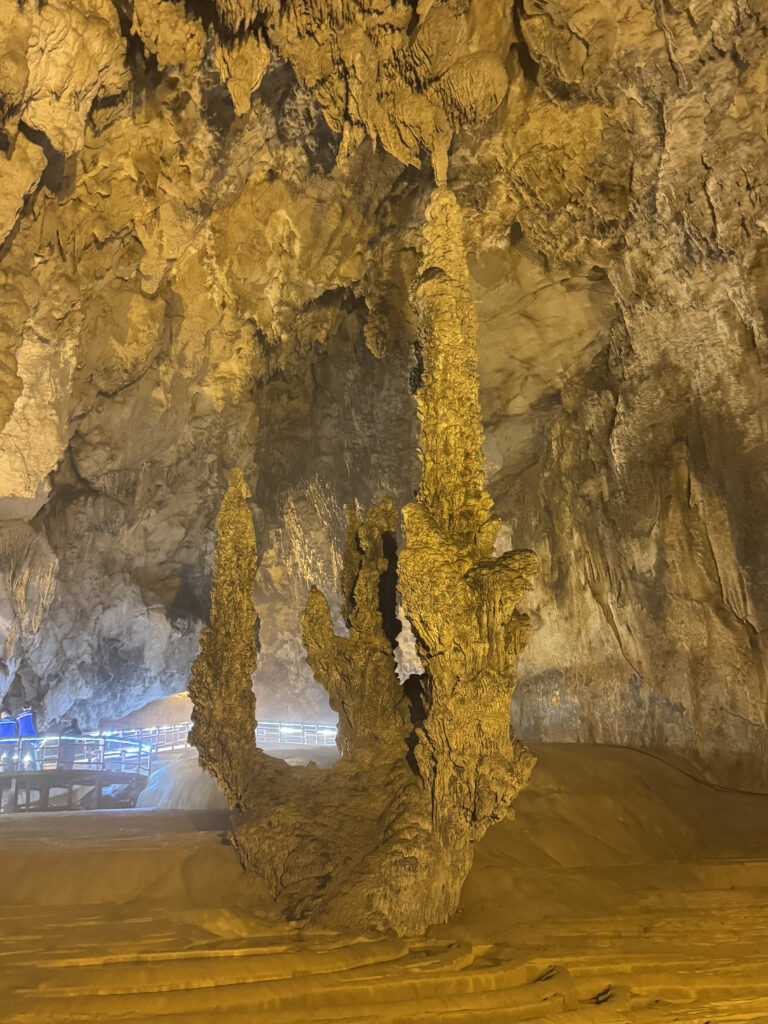
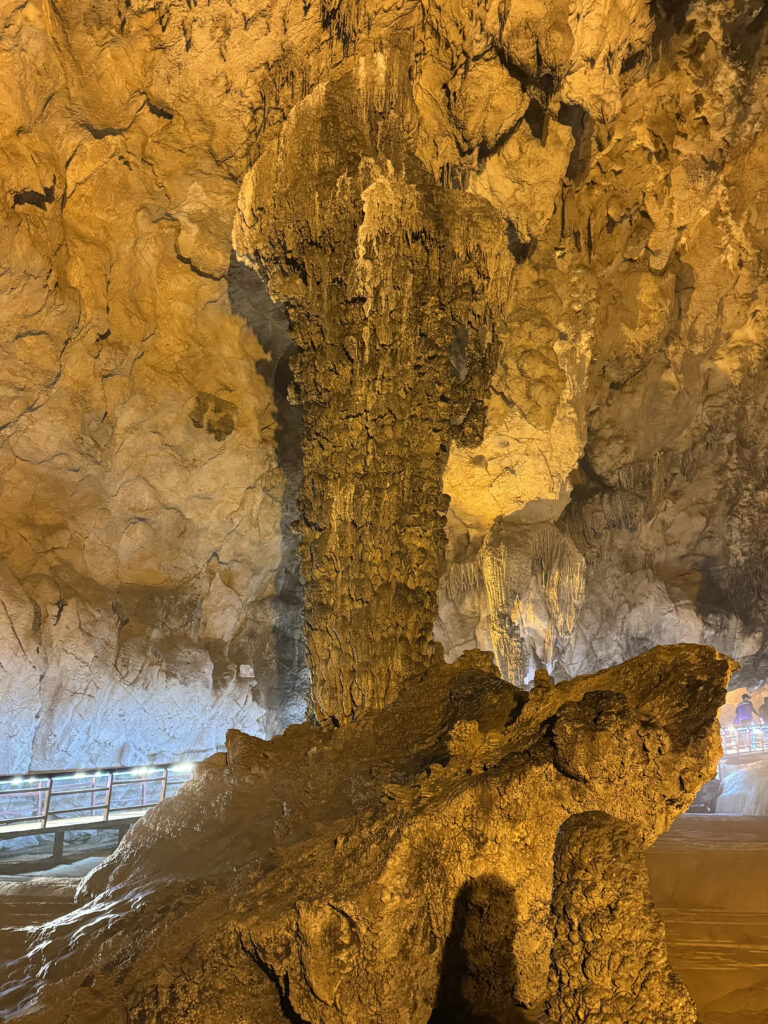
Not far from Ban Gioc Waterfall lies Nguom Ngao Cave, one of the largest and most impressive caves in northern Vietnam. The cave stretches for several kilometers underground and features a wide range of stalactites and stalagmites formed over millions of years.
Inside the cave, temperatures are cooler, making it a comfortable place to visit even during warmer days. Lighting has been installed to help visitors see the natural rock formations, which take on shapes that resemble animals, plants, and human figures. The cave is well-maintained, with safe walking paths and clear signage.
Nguom Ngao Cave offers a contrast to the open landscape of Ban Gioc. While the waterfall is about movement and sound, the cave provides a quiet, enclosed environment where visitors can slow down and observe details. Together, these two sites create a balanced travel experience that includes both outdoor and underground exploration.
Khuoi Ky Stone Village – Living Heritage
Near Ban Gioc, travelers can also visit Khuoi Ky Stone Village, a small settlement with a history of over 400 years. The village is home to the Tay ethnic group, one of the major ethnic minorities in northern Vietnam. What makes Khuoi Ky unique is its traditional stone houses, built using local limestone and designed to suit the mountain climate.
The houses in Khuoi Ky are sturdy and simple, reflecting a close connection between people and their environment. Many families continue to live in these traditional homes today. Visiting the village provides insight into daily life in the border region, where customs, architecture, and community values have been preserved over generations.
Walking through the village, visitors may see locals cooking, farming, or caring for livestock. Some families offer homestay services, allowing travelers to stay overnight and experience local hospitality. These experiences are often quiet and personal, focusing on daily routines rather than performances for tourists.
Local Life and Rural Landscapes
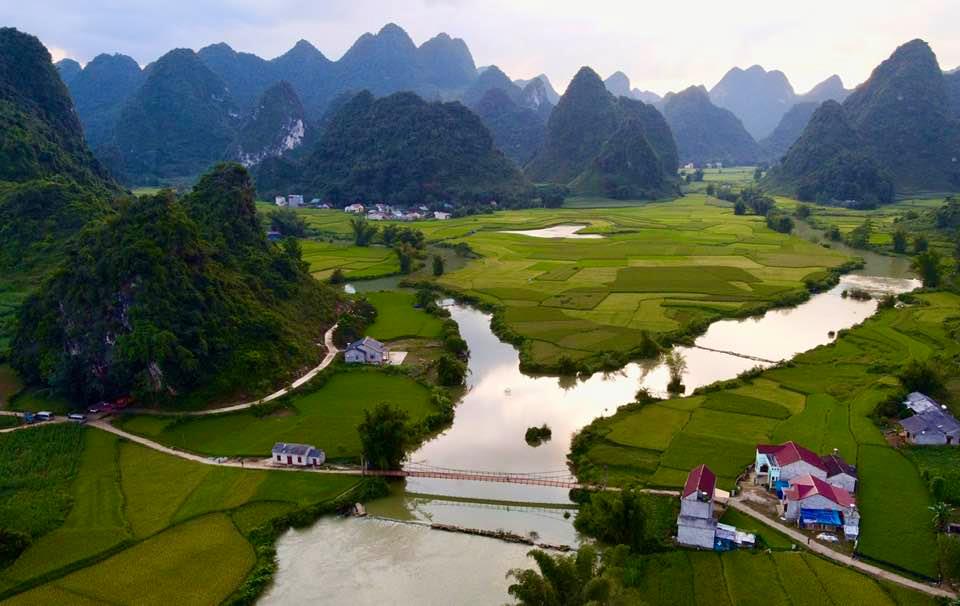
Beyond the main attractions, the surrounding area of Ban Gioc is characterized by rural landscapes and agricultural life. Small villages are scattered across valleys and hills, with rice fields, cornfields, and vegetable gardens forming part of the scenery. In autumn, the fields are often filled with warm colors as crops reach maturity.
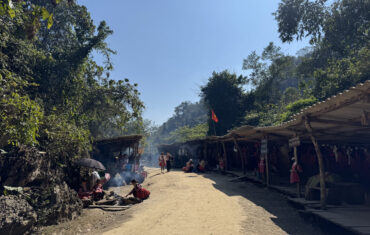
Local markets in Cao Bang Province are another way to understand the region. These markets usually operate on specific days and serve as gathering places for people from nearby villages. Fresh produce, handmade goods, and local food are commonly sold. The atmosphere is simple and practical, reflecting everyday life rather than tourism-focused activity.
Cuisine of Cao Bang – Simple and Full of Character
Cao Bang’s cuisine reflects its mountain environment and ethnic diversity. Food here is generally simple, hearty, and made with local ingredients. One well-known dish is roasted duck with seven spices, prepared using traditional methods and local herbs, offering a rich but balanced flavor that suits the cool climate.
Another popular dish is pho chua, a tangy noodle dish unique to the region. Unlike the hot soup versions found elsewhere in Vietnam, pho chua is often served with a slightly sour sauce, roasted meat, and fresh vegetables. Smoked sausages and preserved meats are also common, especially in colder months, as they can be stored for long periods.
Meals are usually shared without hurry, either with local families or in small restaurants. Enjoying the cuisine in Cao Bang is a calm experience, in a warm and welcoming setting.
Autumn – The Best Season to Visit
Autumn is widely considered the best time to visit Ban Gioc for several reasons. The weather is cooler and more comfortable than in summer, with less rain and clearer skies. Roads leading to Cao Bang are generally safer during this season, making travel easier.
Autumn is also harvest time, which adds cultural value to the visit. Visitors may see farmers working in the fields or preparing crops for storage. The natural colors of the season enhance the beauty of the landscape without overwhelming it.
Responsible Travel and Preservation
As Ban Gioc becomes more popular, environmental protection is increasingly important. Local authorities and communities are working to manage tourism in a way that preserves the natural environment. Visitors are encouraged to respect local customs, avoid littering, and support community-based tourism services.
Choosing local guides, homestays, and restaurants helps ensure that tourism benefits the people who live in the area. Responsible travel helps maintain the balance between development and conservation.
A Quiet and Meaningful Destination
Ban Gioc Waterfall is not a destination for fast-paced travel or busy sightseeing schedules. It is a place that invites visitors to slow down, observe, and connect with nature and local culture. The combination of water, mountains, villages, and traditions creates a complete and balanced experience.
To visit Ban Gioc in autumn is to experience a quieter side of Vietnam, where nature, history, and daily life come together naturally. Long after leaving, many travelers remember the sound of the waterfall, the beautiful landscapes, and the warmth of local people – memories that remain calm, simple, and lasting.